Strategic Direction Towards Universal Free Healthcare Unveiled
Ministry of Health Seeks Input on Developing Free Basic Healthcare Service Package to Reduce Out-of-Pocket Burden
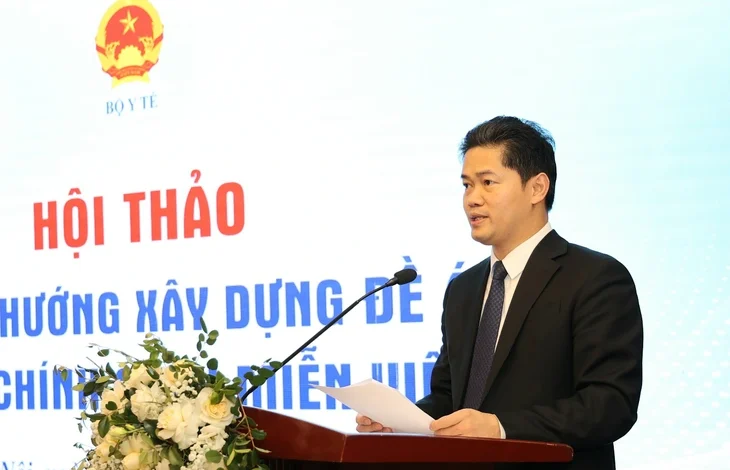
On the afternoon of December 1, the Ministry of Health (MoH) organized a workshop to gather expert opinions on the phased development of a scheme to implement free healthcare (hospital fee/charge exemption), in line with Resolution No. 72-NQ/TW dated September 9, 2025. This marks the first time the MoH has consulted experts toward realizing a policy for periodic health check-ups and free healthcare for all citizens.
Context and Healthcare Financial Challenges
Speaking at the workshop, the Permanent Deputy Minister of Health acknowledged Vietnam’s significant achievements in healthcare, including a Health Insurance (HI) coverage rate of 94.29% of the population in 2024 and a medical facility network extending down to the commune level.
However, the most pressing challenge remains the public’s high out-of-pocket spending, which is estimated to exceed 40% of total healthcare costs—a rate considered high by World Health Organization recommendations. This situation exacerbates the risk of impoverishment due to illness, particularly for the poor, vulnerable groups, and those with chronic diseases.
Significance and Implementation Roadmap
The MoH representative emphasized that the gradual move toward free healthcare is an urgent requirement, bearing profound social and humanistic significance beyond merely financial solutions. The goals are:
-
To reduce the cost burden on citizens, especially vulnerable groups.
-
To increase equity in accessing health services, ensuring the principle of “leaving no one behind.”
-
To enhance healthcare quality by encouraging patients to seek earlier and more effective medical examination and treatment.
Development of the “Basic Healthcare Service Package”
The scheme will be built upon the foundation of universal Health Insurance. According to the MoH’s Health Insurance Department, the strategy involves gradually reducing, and eventually eliminating, the co-payment rate for many basic service groups.
A defined “basic healthcare service package” will be established, which includes a list of appropriate diseases, drugs, equipment, and techniques aligned with budget capacity and the Health Insurance Fund. This will constitute the service package citizens are entitled to receive free of charge within the insurance scope, while services requested on demand will require patient contributions to prevent unnecessary utilization.
Socio-Economic Impact
Experts noted that implementing free healthcare is expected to prevent tens of thousands of households from falling into poverty annually due to medical expenses. It will narrow the health gap across income groups and regions, encouraging earlier access to services. This, in turn, increases the potential for timely disease detection and treatment, reducing complications and mortality, and strengthening public trust in the state’s policies and health system.